How Much Does a Salon Website Cost in 2026?
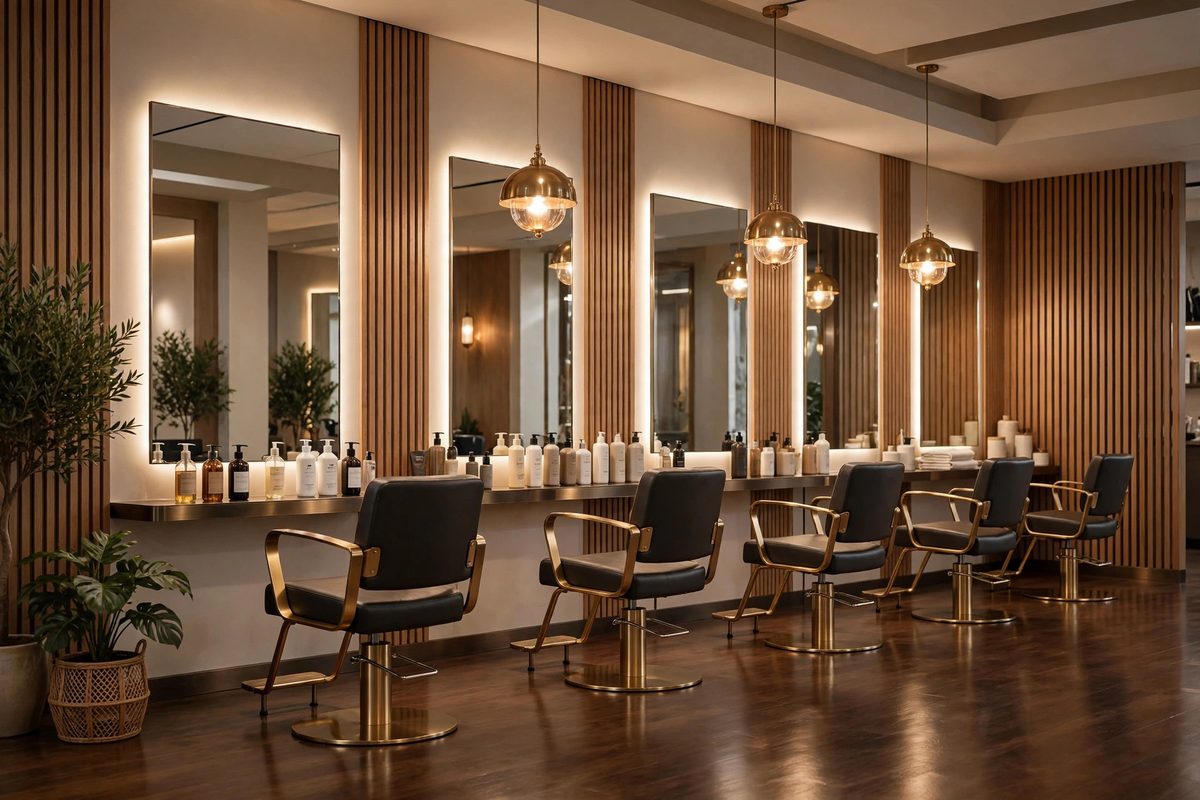
Ask five people what a salon website costs and you'll get five different answers. A freelancer on Facebook says $300. An agency says $6,000. Your stylist's cousin offers to do it for free pizza. All three can be telling the truth — because "a salon website" covers everything from a one-page digital menu to a fully custom booking machine. Here's what salon owners actually pay in 2026, what you're really getting at each price point, and the separate costs most quotes quietly leave out.
The Short Answer: 2026 Price Ranges
Let's get the numbers on the table first. A 2026 salon pricing guide that looked at more than 300 salon, spa, and beauty websites puts the mid-2026 US market at roughly these bands: a DIY builder subscription at $1–$14 a month; a template with professional setup at $80–$400; an essential agency package at $850–$1,500 — usually around four pages, a booking widget, and basic local SEO; a more complete mid-tier build at $1,500–$3,000; full custom agency work at $2,000–$10,000 and up; and the most bespoke projects reaching around $12,000. (Source: Qrolic's 2026 salon website pricing guide.)
One thing to accept before you compare anything: there is no useful average. A solo chair renter and a three-location salon with online retail are buying different products, and an "average" of the two helps neither. What matters is which band matches your actual requirements — and which costs in the quote are one-time versus ongoing. More on both below.
Why Two Salons Get Wildly Different Quotes
The price doesn't come from the word "salon." It comes from scope. A barbershop with six services is a fundamentally simpler build than a day spa offering facials, massage, nails, and retail — each service family usually earns its own page, its own photos, and its own booking flow. Here's what actually moves a quote between bands:
- Pages and services. More treatments mean more pages, more content to write, and more structure to design. A simple menu site is a few days of work; a treatment-by-treatment site is a few weeks.
- Template vs. custom design. Templates cut design hours dramatically. Custom work means a designer spending real days on your layout, typography, and brand feel.
- Booking depth. There's a world of difference between a "Book Now" link that jumps to a phone number and a full booking flow with staff calendars, deposits, and reminders. If you're planning around booking, read our guide to salon website booking features that fill chairs before you sign anything.
- Photography and content. Salon websites live or die on photos — stylist portfolios, before-and-after galleries, treatment rooms. If you don't have strong photos, someone has to shoot or source them, and that's billable. Clients pick a salon with their eyes, so the gallery isn't decoration; it's the closer.
- Local SEO scope. Basic setup (titles, map listing, schema) is one thing; a real local-search strategy with service-area pages is another. Nobody finds you by admiring your homepage from afar — they search "balayage near me."
- Locations and brand requirements. Each added location multiplies pages and booking complexity. An established visual identity that must be matched precisely costs more to execute than a fresh, flexible brief.
When a quote surprises you, compare the deliverables line by line — pages, design hours, booking integration, SEO, content, photography — not the headline number. Two $2,000 quotes can be completely different products.
The Booking System Is a Separate Bill
Here's the biggest surprise hiding in salon website quotes: the website and the booking system are two separate products with two separate prices. The website is the pages — home, services, gallery, about, contact. The booking system is separate software, embedded into the site through a widget or connected through a booking link. Many quotes price the first and barely mention the second.
In 2026, booking software runs from free or commission-based plans, to mid-tier platforms at roughly $24–$56 a month, up to enterprise and multi-location platforms around $139–$599 a month. Those are market ranges, not sticker prices — verify with the provider before you commit, because booking pricing changes often.
And the monthly fee is only the start. Check the fine print for the costs that don't appear in the headline number: payment-processing fees on every deposit or payment taken online; per-new-client commissions (a "free" platform that takes a cut of every new booking can quietly cost more over a year than a paid plan if you're growing); extra staff calendars — many platforms charge per stylist; transaction fees; and renewal-price increases after your intro period.
The honest math is two-year math. A $500 website with $90 a month in booking fees costs more over two years than a $2,000 website with a $25-a-month setup. Always ask a quote: which of these software costs have you priced in?
The Ongoing Costs Nobody Puts in the Quote
A website quote is a build quote. The build is day one. Before you pick a winner, budget the running costs:
- Domain: roughly $10–$15 a year. Small, but it renews forever.
- Hosting: bundled into builder subscriptions, billed separately on most custom builds.
- Maintenance and support: when outsourced, technical support commonly lands around $50–$200 a month — updates, security, backups, someone to call when the booking widget breaks on a Saturday.
- Content updates: new services, price changes, stylist turnover, fresh photos. That's somebody's time — yours or billed.
- Booking transaction costs: the processing and commission fees from the section above, which scale with your revenue.
None of these are deal-breakers — but they should be in your comparison spreadsheet next to the build quotes. A low build price with high running costs is a subscription wearing a costume.
Template vs. Custom: What's the Smarter Spend?
For a solo stylist or a small salon with a simple service menu, a template is often the sensible buy: lower upfront cost, faster launch, and plenty for a site that needs to show the menu, the work, and the booking button. Custom development earns its keep when you have multiple locations, a strong brand that needs a specific feel, complex booking or POS requirements, or a content structure a template starts fighting against.
But here's the honest point most web agencies won't volunteer: you may not need a full website yet at all. A branded digital service menu — your prices, service categories, contact info, and a booking link — covers roughly 90% of what a new client's looking for, for under $10 a month. If you're a solo stylist building your book, that's genuinely good advice. When the chair is full and you need to rank on Google, take bookings automatically, and look established to higher-spending clients, the real site pays for itself. If you're unsure where you land, see our work to compare what different build levels actually look like.
Where Salon Owners Overspend — and How to Avoid It
Most wasted salon website money falls into a few predictable traps:
- Paying custom-agency rates for a brochure site. If you need five pages and a booking link, a $6,000 bespoke build is paying for flexibility you'll never use. Match the build to the brief.
- Picking booking software on the monthly fee alone. The free tier with per-client commissions is the classic trap — the "cheap" option becomes the expensive one exactly when your marketing starts working. Read our breakdown of the hidden costs of cheap websites for the full pattern.
- Buying features nobody will maintain. The blog you'll never write. The online shop you'll never stock. Every unmaintained feature makes the site look abandoned — it's better to launch without it and add it when you can feed it.
- Ignoring local SEO. A beautiful site that doesn't rank for "nails near me" is an expensive brochure. The three things that decide which salons show up in local search are a fast, findable website (a page for every service and every area you cover), a connected Google Business Profile, and a steady stream of reviews — Zarla's 2026 salon guide found the same three signals behind every findable salon they studied.
- Introductory pricing that jumps at renewal. That $3-a-month builder deal is a year-one price. Ask for the year-two price in writing before you build on it.
- Underestimating content. Photos, service descriptions, stylist bios. A template filled with stock photos of strangers won't sell your chair. Budget for a real photo shoot or plan for a delay — it's cheaper than a redesign a year later.
So, What Should You Budget?
For a single-location salon that wants to look professional, take bookings, and show up in local search: most end up in the $850–$3,000 range for a proper build, plus $25–$60 a month in running costs. Solo stylists can genuinely start under $15 a month with a builder and upgrade when the book fills. Multi-location or brand-heavy salons should plan $3,000–$10,000. And whatever band you're in, get the quote in writing with one-time and ongoing costs itemized separately — that's the single habit that prevents nearly every budget surprise in this list.
If you'd rather plan around a fixed number instead of a range, see our fixed-price packages — you'll know the full build cost before we start. Or get a free quote and we'll tell you honestly which band your project actually falls in, including the parts most quotes leave out.
Frequently Asked Questions
What is the average cost of a salon website in 2026?
There is no single useful average because scope varies so much. Market-observed 2026 ranges run from $80-$400 for a template with professional setup, $850-$1,500 for an essential agency package, $1,500-$3,000 for a mid-tier build, and $2,000-$10,000+ for full custom work, with bespoke projects reaching around $12,000. Most single-location salons land in the $850-$3,000 band for a professional build.
Is the booking system included in the website price?
Usually not. The website and the booking system are separate products. Booking software ranges from free or commission-based plans to roughly $24-$56 a month for mid-tier platforms and $139-$599 a month for enterprise or multi-location platforms. Always ask which software costs a quote includes, and check for per-client commissions, payment-processing fees, and per-staff-calendar charges.
Can I just use a website builder instead of hiring a designer?
Yes, especially if you are a solo stylist or small salon starting out — builder subscriptions run $1-$14 a month. The trade-offs are time (you are the designer now), limited brand differentiation, and weaker local SEO out of the box. On day one, a branded digital service menu with your prices and a booking link, under $10 a month, covers most of what new clients look for.
How much does it cost to keep a salon website running after launch?
Budget separately for the domain (roughly $10-$15 a year), hosting (bundled in builders, separate on custom builds), booking software (monthly, plus transaction and commission fees), and maintenance and support (commonly around $50-$200 a month when outsourced). Content updates — new services, price changes, staff photos — add ongoing time or cost.

Muhammad Usman designs and builds high-converting websites for small businesses — and writes practical guides like this one from real project experience.
Keep Reading

Salon and Spa Websites: Booking Features That Fill Chairs
How Much Does a Plumber Website Cost in 2026?

The Hidden Costs of Cheap $99 Websites
Need a Website That Actually Performs?
Fixed pricing, professional build, live in weeks. Tell us about your project — free strategy call, no pressure.