How Much Does an Electrician Website Cost in 2026?
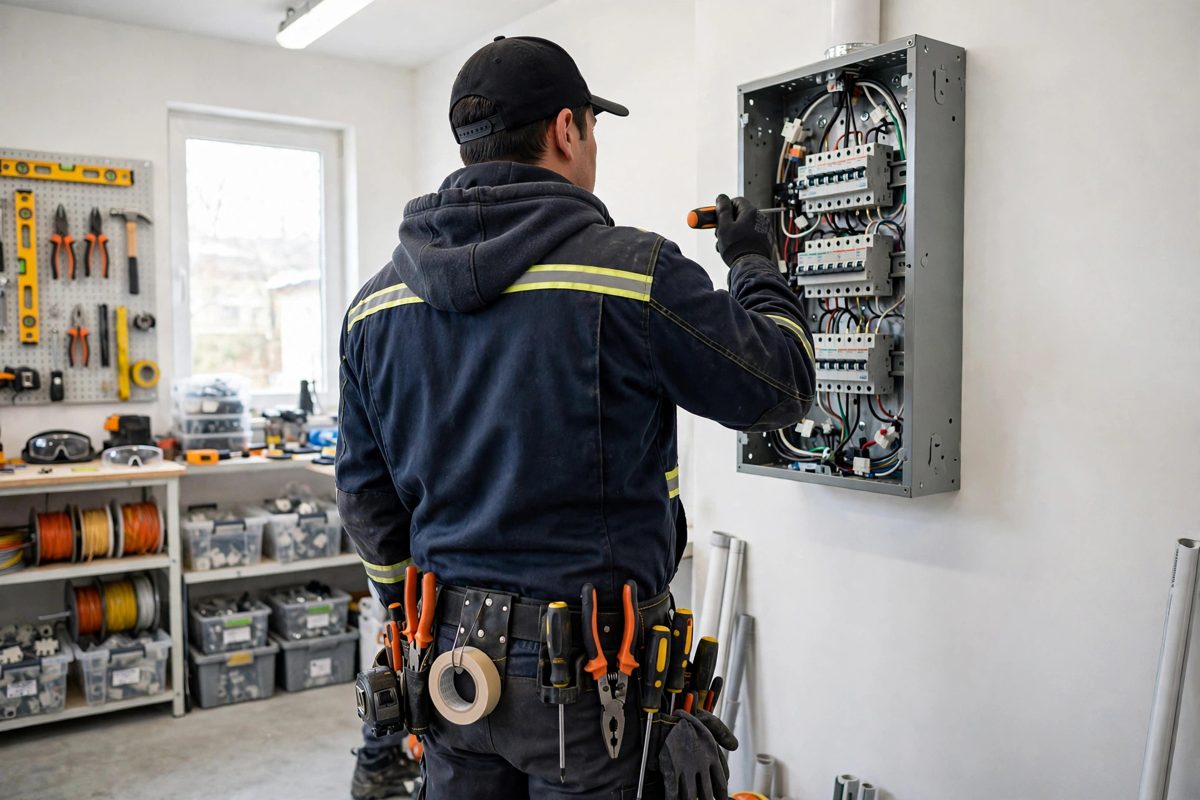
Ask three web designers what an electrician website costs and you'll get three answers that look like they belong to different jobs. One quotes a few hundred dollars, another quotes five figures, and both insist they're right. The annoying truth is that they might both be — because "a website" can mean a one-page online business card or a fast, local-search-ready machine with a page for every service you offer. If you're an electrician shopping for a site, the price tag alone tells you almost nothing. What matters is what's inside the quote, what you'll keep paying after launch, and whether the finished site actually turns a panicked homeowner at 9pm into a phone call.
The Short Answer: What Electricians Typically Pay
Here's the honest range, pulled from what trade-focused designers actually publish. A DIY builder site (Wix, Squarespace, GoDaddy) runs about $15–$50 a month, plus your own time. A template-based build from a freelancer or small shop lands roughly in the $500–$2,000 range. A custom build from a professional designer or agency typically runs $3,500–$12,000 upfront, according to one electrician-focused design guide that breaks down exactly what that buys. And the monthly managed route — no big upfront bill, one flat fee covering design, hosting and upkeep — commonly starts around $200–$500 a month, with some trade specialists advertising from $299 a month. Estimates vary this much because the scope varies this much, not because everyone's guessing. A one-page site and a 15-page site with local SEO are different products wearing the same name.
If you want a single rule of thumb for a small electrical business: a professional build plus hosting and maintenance usually lands somewhere between $800 and $3,000 upfront with $30–$300 a month ongoing, based on a 2026 contractor pricing guide that covers electricians, plumbers and HVAC firms together. Custom work with dedicated service pages, copywriting and local SEO setup pushes past that range. That's the bracket most one-to-five-person electrical firms should budget around — and if a quote sits far outside it in either direction, ask what it leaves out or adds in.
Why Quotes Disagree So Much
Two quotes can differ by $8,000 and neither designer is lying. The gap usually comes down to five things. First, page count: a homepage plus contact page is a weekend job; a homepage plus separate pages for panel upgrades, EV charger installs, rewires, generator installs and emergency callouts is a real build, and each of those pages is a separate chance to rank when someone searches that exact job. Second, who writes the words: if you're expected to supply all the copy and photos, the quote drops — and so does the quality, usually. Third, local search setup: a site that's just "designed" versus one that's set up to show in "electrician near me" searches with a completed Google Business Profile is a different job entirely. Fourth, speed and mobile work: a site that loads in under 2.5 seconds on a phone takes real engineering, and that engineering costs money. Fifth, what happens after launch: some quotes end the day the site goes live, others include hosting, security, backups and small updates for years. Compare quotes line by line on those five points and the mystery usually disappears.
The Three Costs Nobody Puts in One Quote
The most common budgeting mistake tradespeople make is treating a website as a one-time purchase. It's really three costs. The build is the one-time design and development. Hosting keeps it online, fast and secure — that's ongoing, even if it's only a small monthly fee. Maintenance covers updates, backups, fixes and the work of staying visible on Google. A cheap quote that only covers the build is how you end up with a site that's online but slowly falling apart: outdated, unpatched, and invisible by the time a homeowner searches at night with a tripped breaker. Before you sign anything, ask each designer to state all three numbers separately. If they can't, or won't, that's your answer about how the relationship will go.
What Each Option Actually Costs
DIY builders ($15–$50/month, sometimes up to $159 on higher tiers). Cheapest in cash, priciest in your evenings. You're the designer, the copywriter, the tech support and the SEO person — after a full day on the tools. For a one-person shop that just needs a credible page with a phone number, this can be enough. The ceiling shows up fast, though: builder sites tend to load slowly, rank weakly for competitive local searches, and resist the kind of custom structure (a page per service, per town) that wins trade work.
Freelancer or small shop ($500–$3,000). This is the middle most electricians land in. UK-focused guides put freelance electrician sites around £1,000–£3,000, and US trade designers publish similar brackets for template-based builds with basic SEO. You get a professional-looking site, usually 5–10 pages, with contact forms and click-to-call. What you often don't get is ongoing local SEO, review management or a content plan — so ask whether that $1,500 includes being found, or just being online.
Agency or custom build ($3,500–$12,000+, sometimes $15,000+). This is where dedicated service pages, professional copy, photography direction, local SEO setup and speed engineering live. It's overkill for a solo electrician who works one town, and it's the right call for a multi-crew firm competing in a busy city or chasing commercial contracts, where one panel-upgrade or EV-install job can be worth thousands. A guide to electrician websites that actually convert puts custom builds in this bracket and makes the case plainly: a single missed emergency call on a Friday night can cost more than the difference between a cheap template and a proper build.
Monthly managed plans ($0 upfront, roughly $200–$500/month). You rent the site instead of buying it: design, hosting, security, updates and basic SEO in one predictable fee. The cash-flow case is real — no $8,000 invoice before you've earned a dollar from the site — but read the contract before you celebrate. Who owns the site if you cancel? What happens to your domain and your content? A plan you can leave with your site intact is a very different deal from one that takes your website with it when you stop paying. If the answer to "do I own my website?" is fuzzy, our guide to website ownership covers the questions worth asking before you sign.
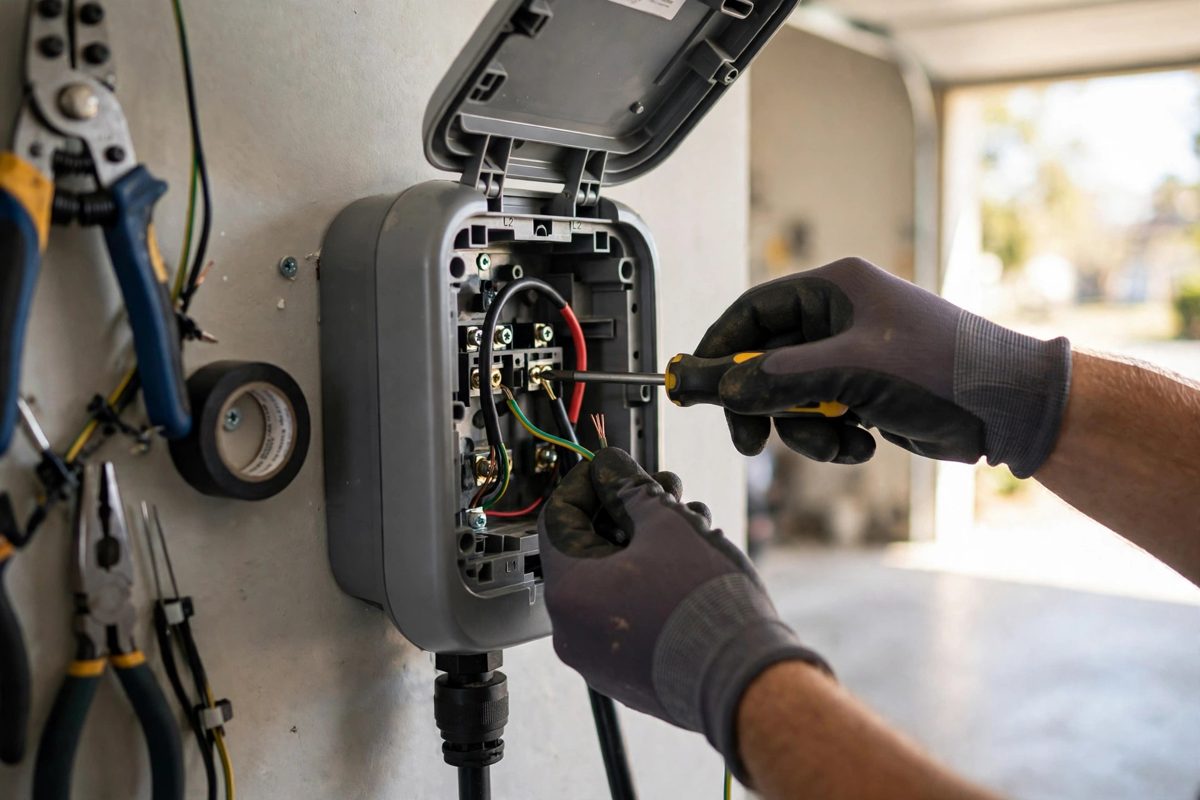
What Pushes the Price Up (and What's Worth Paying For)
Not every add-on is worth it, but a few genuinely move the needle for electricians. One page per service is the big one: nobody searches "electrician services," they search "EV charger installation near me" or "panel upgrade cost," and a page built for that exact search is how you show up for it. Local search and Google Business Profile work is the second — one local-ranking survey puts Business Profile signals at roughly a third of local pack rankings, and the map results above the organic links get the bulk of "electrician near me" clicks. A site without that setup is a shopfront on a street nobody walks down. Real photos of real jobs beat stock photography every time; homeowners pattern-match to "this looks like a real electrician," not "this looks like a template." Speed is the quiet one: about half of mobile visitors abandon a site that takes longer than 3 seconds to load, and emergency searches have the least patient visitors on the internet. If your designer never mentions load time, they haven't thought about how your customers actually find you.
On the other side, be sceptical of the extras that pad quotes without booking jobs: rotating hero carousels (they slow the page and split attention), 11-field contact forms (every extra field costs you submissions), live-chat widgets (the homeowner at 9pm wants to dial, not type to a chatbot, and the widget's code slows the page), and a giant flat list of 47 services on one page. A good electrician site does five things in the first phone screen: says what kind of electrician you are, where you work, shows your licence number, shows a phone number you can tap, and says whether you take emergency calls. Everything else is below that, in that order.
How Long Does It Take, and When Does It Pay Off?
Timelines vary as much as prices, and anyone promising overnight rankings is selling you something else. Trade-specialist teams that build the same kind of site repeatedly often quote two to four weeks from brief to launch; traditional agencies with longer queues can take three to six months for a comparable build. Ranking is a separate clock: a well-set-up Business Profile with active reviews can start showing in local results within four to eight weeks, while organic rankings for competitive terms like "electrician [city]" realistically take four to nine months of consistent work. That's not a reason to wait — it's a reason to start now, because the clock only runs once the site is live. And the payback math is friendlier than it looks: if one extra booked job a month comes from the site, most mid-range builds pay for themselves within a year. If the site books one emergency callout you'd otherwise have missed, it can pay for itself in a weekend.
How to Compare Quotes Without Getting Burned
Line the quotes up and check the same seven things on each: page count and whether services get their own pages; who writes the copy and supplies photos; whether local SEO and Business Profile setup are included or extra; mobile speed targets, not just "mobile-friendly" as a word; the monthly cost after launch and what it covers; who owns the site, domain and content if you leave; and a realistic launch date. Our plumber website cost guide walks through the same comparison for another trade, and the pattern holds: the cheapest quote usually wins by leaving out the parts that bring in calls. A 2026 contractor website cost guide makes the same point from the builder's side — budget for all three costs, prioritise getting found, and don't pay for a site you then have to babysit yourself.
If you'd rather skip the quote-comparison homework, see our fixed-price packages — you'll know the full cost before work starts, with no hourly meter running. And if your situation doesn't fit a package — multiple crews, commercial work, a service area spanning several towns — look at our web design services and get a free quote telling us what you do, where you work, and what a good month of new jobs looks like. We'll tell you honestly which bracket you're in and what would actually move the needle for you.
Frequently Asked Questions
How much does an electrician website cost in 2026?
Most electricians pay $800–$3,000 for a professional build plus $30–$300 a month for hosting and maintenance. Custom builds with dedicated service pages and local SEO setup typically run $3,500–$12,000 upfront, while monthly managed plans commonly start around $200–$500 a month with no large upfront fee.
Is a DIY website builder enough for an electrician?
It can be, if you work one town and just need a credible page with a tap-to-call number — builders run about $15–$50 a month. It struggles once you compete for "electrician near me" searches, because builder sites tend to load slowly and lack the per-service, per-town page structure that wins local trade work.
What should an electrician website include to win calls?
A tap-to-call number in the first phone screen, your licence number, your service area, one page per service (panel upgrades, EV chargers, rewires, emergency work), real photos of finished jobs, Google reviews, and a short quote form. Speed matters too: about half of mobile visitors leave a site that takes longer than 3 seconds to load.
Do I own my website if I pay monthly?
It depends on the contract. Some managed plans let you keep the site if you cancel; others take it with them when you stop paying. Ask who owns the site, domain and content before you sign, and get the answer in writing.

Muhammad Usman designs and builds high-converting websites for small businesses — and writes practical guides like this one from real project experience.
Keep Reading
How Much Does a Plumber Website Cost in 2026?
How Much Does a Contractor Website Cost in 2026?

How to Choose the Right Web Design Agency (12-Point Checklist)
Need a Website That Actually Performs?
Fixed pricing, professional build, live in weeks. Tell us about your project — free strategy call, no pressure.