The E-commerce Website Launch Checklist: 15 Things to Get Right Before You Sell
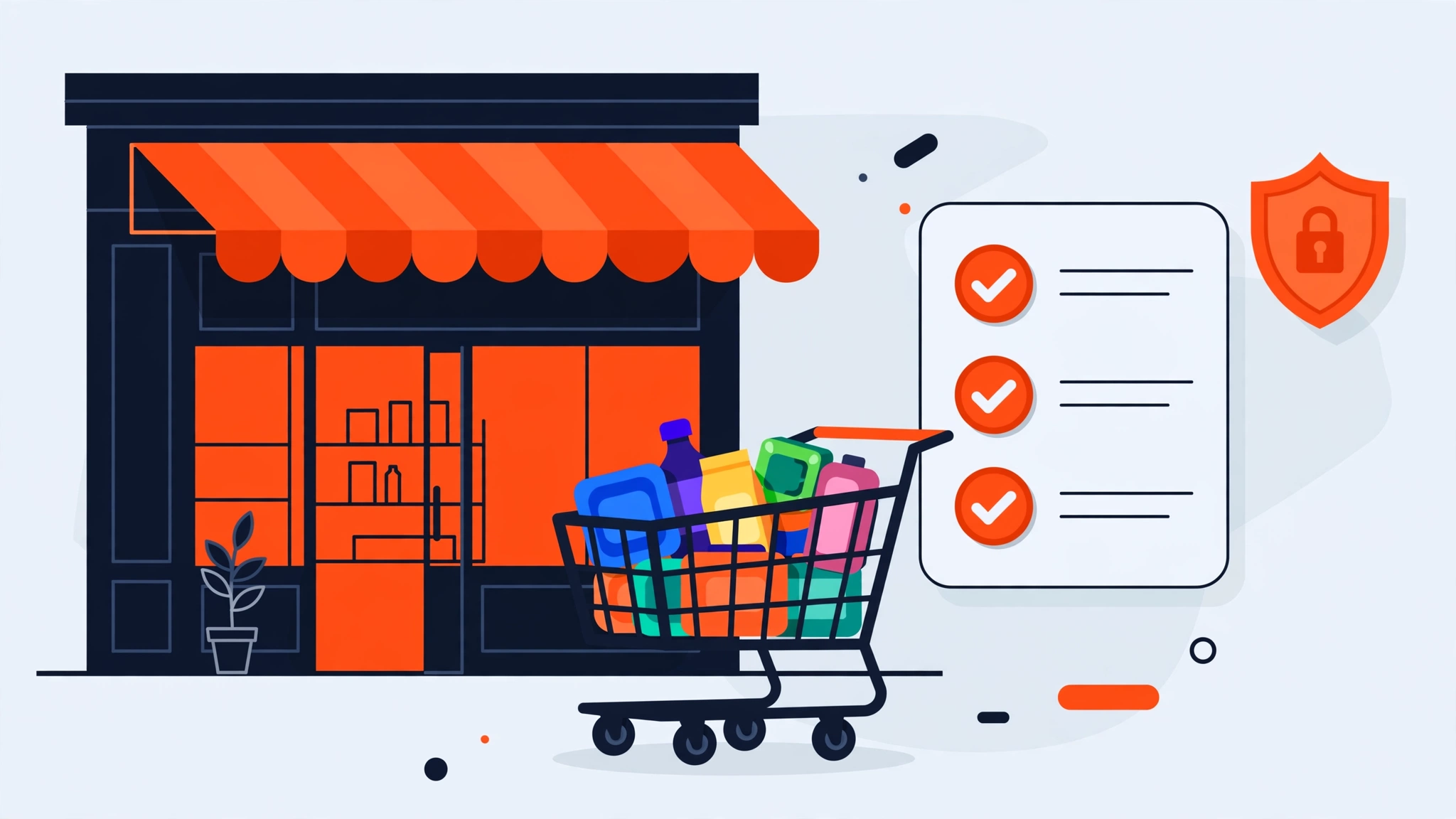
Launching an online store is exciting — and unforgiving. Unlike a brochure site, where a small flaw costs you a shrug, a flaw in a store costs you actual sales: a broken checkout, a missing trust signal, a shipping surprise. This 15-point checklist covers everything your e-commerce website needs before you take your first order.
1. Products: The Foundation
1. Complete, honest product pages
Every product needs: a clear title, multiple good photos (or quality mockups), a description that answers real buyer questions, price, variants (size/color), and stock status. Thin product pages with one blurry photo are the top conversion killer for new stores.
2. Logical categories and search
If customers cannot find products, they cannot buy them. Categories should mirror how buyers think, not how your warehouse is organized — and site search should handle typos gracefully.
2. Checkout: Where Money Changes Hands
3. Secure payment processing
SSL certificate (https) is non-negotiable, plus a trusted payment gateway — Stripe, PayPal, or similar. Display security badges near the payment step; they measurably reduce abandonment. Every store we build includes secure payment integration as standard.
4. Guest checkout option
Forcing account creation before purchase is one of the most abandoned-cart triggers in e-commerce. Let people buy as guests; offer the account after the order.
5. No surprise costs
Show shipping costs and taxes before the final step. Unexpected fees at checkout are the number one stated reason for cart abandonment worldwide.
6. Test every path
Place real test orders: different products, quantities, addresses, payment methods, and crucially, mobile. A checkout that works on desktop but breaks on phones loses most of its sales — see why mobile matters.
3. Trust: Why Strangers Should Pay You
7. Clear return and refund policy
Buyers need to know what happens if something goes wrong — before they pay. Publish a plain-language refund policy and link it in the footer and near the checkout.
8. Contact information that is real
A real email, a phone or WhatsApp number, a contact page, and ideally a physical location. Anonymous stores with only a form convert poorly. Our contact page shows the standard: multiple ways to reach a human.
9. Reviews and social proof
Product reviews, testimonials, and any third-party ratings. New stores can start with reviews of the service experience even before product reviews accumulate.
4. Operations: The Boring Stuff That Matters
10. Shipping rules configured
Zones, rates, free-shipping thresholds, delivery time estimates — all configured and displayed accurately. Wrong shipping math creates support tickets and refunds.
11. Order emails work
Confirmation, shipping notification, delivery, and refund emails must send reliably and look professional. Test with real addresses, including spam-folder checks.
12. Inventory and stock handling
Decide what happens at zero stock: hide the product, show "out of stock," or allow backorders? Selling what you do not have is a fast way to earn chargebacks.
5. Growth: Getting Found and Getting Faster
13. SEO foundations per product
Unique titles and descriptions for every product and category page — not duplicated manufacturer text. Product pages that rank bring free traffic for years. Start with our local SEO basics.
14. Speed optimization
Store pages are image-heavy and every extra second of load time measurably cuts conversions. Compress images, lazy-load below the fold, and test on real phones — our speed guide has the full playbook.
15. Analytics and tracking
Google Analytics with e-commerce events: product views, add-to-cart, checkout steps, purchases. You cannot improve what you cannot measure.
Before you launch: run through this list with a fresh eye — or better, ask someone who has never seen the store to buy something while you watch. You will catch in ten minutes what you missed in ten days.
What This Costs to Build Right
A proper small e-commerce build runs $2,500–$8,000 from freelancers and $8,000–$25,000 from agencies — the catalog, checkout, and testing are real work (full numbers in our cost guide). Our Professional package covers the full checklist above at a fixed $4,999.
Ready to sell online? Book a free strategy call — we will map your products to the right store setup, honestly and without pressure.

We design and build high-converting websites for small businesses — fixed pricing, honest advice, and practical guides like this one.
Keep Reading

Website Speed: How Loading Time Quietly Decides Your Sales and Google Rankings
Local SEO Basics: How Small Businesses Get Found on Google
Why Mobile-Responsive Design Is Non-Negotiable in 2026
Need a Website That Actually Performs?
Fixed pricing, professional build, live in weeks. Tell us about your project — free strategy call, no pressure.